
What if the “clunky” security measures your clients complain about are actually the most effective tool you have for winning their long-term loyalty? You can explain your cybersecurity requirements without sounding like you’re making their lives harder by framing every protocol as a proactive measure to guard their digital identity rather than a technical chore. Using empathetic cybersecurity talking points for accounting clients allows you to position these mandates as a premium service that protects their life’s work. We understand the tension of being the messenger for IRS security mandates because our Dallas-based team has spent over 20 years helping tax pros find that balance.
In this guide, we’ll show you how to communicate your firm’s security measures in plain language that builds trust, explains process changes, and meets IRS Publication 4557 standards. We’ll walk through how to handle friction over secure portals and MFA by using “knowledgeable colleague” responses that validate client frustrations while holding the line on safety. By the end of this post, you’ll have a clear strategy to transform regulatory burdens into a competitive advantage that attracts higher-value clients who prioritize their privacy.
Key Takeaways
- Shift your perspective from being a “rule-enforcer” to a “digital guardian” to build deeper trust and loyalty with your clients.
- Master specific cybersecurity talking points for accounting clients that explain the value of secure portals and MFA in plain, relatable language.
- Learn how to validate client frustrations regarding security protocols while firmly maintaining the standards required by IRS Publication 4557.
- Position your compliance efforts as a competitive advantage by featuring your security measures in engagement letters to attract higher-value clients.
Why You Need a Cybersecurity Communication Strategy for Your Clients
In the current environment, your clients don’t just see you as a tax preparer. They see you as a guardian of their most sensitive financial life. Developing clear cybersecurity talking points for accounting clients isn’t just about meeting a technical requirement; it’s about building a bridge between complex IRS mandates and the peace of mind your clients deserve. When you communicate your security measures effectively, you transition from being a service provider to a trusted protector who values their privacy as much as they do.
This shift in perspective is driven by the “legal why” behind our operations. IRS Publication 4557 and the FTC Safeguards Rule aren’t just administrative hurdles. They represent a federal standard designed to keep taxpayer data out of the hands of cybercriminals. By performing a regular information security audit, you demonstrate to your clients that your firm is proactive rather than reactive. Clear communication reduces the friction that often comes with new security protocols, positioning your firm as a premium partner in an increasingly digital world.
The Shift from ‘IT Problem’ to ‘Client Expectation’
There was a time when cybersecurity felt like a back-office IT issue. That era has ended. High-profile data breaches have made taxpayers incredibly sensitive to how their information is handled. The “old way” of sending documents through unsecured email is now a significant red flag for sophisticated clients. The 2026 standard demands an encrypted ecosystem where every touchpoint is protected. Clients now expect their CPA to be even more secure than their local bank because the data you hold is the key to their entire financial identity.
The Regulatory Burden as a Shared Value
It’s helpful to frame compliance as a shared value rather than a chore. When you explain that your protocols meet the rigorous standards of IRS Publication 5708, you’re telling the client that their safety is your priority. A central part of this commitment is maintaining a Customized WISP. This document isn’t just for the IRS; it’s a promise to your clients that you have a disciplined, documented process for keeping their identity safe. It turns a regulatory burden into a powerful reason for them to stay with your firm for years to come.
5 Essential Cybersecurity Talking Points for Your Next Meeting
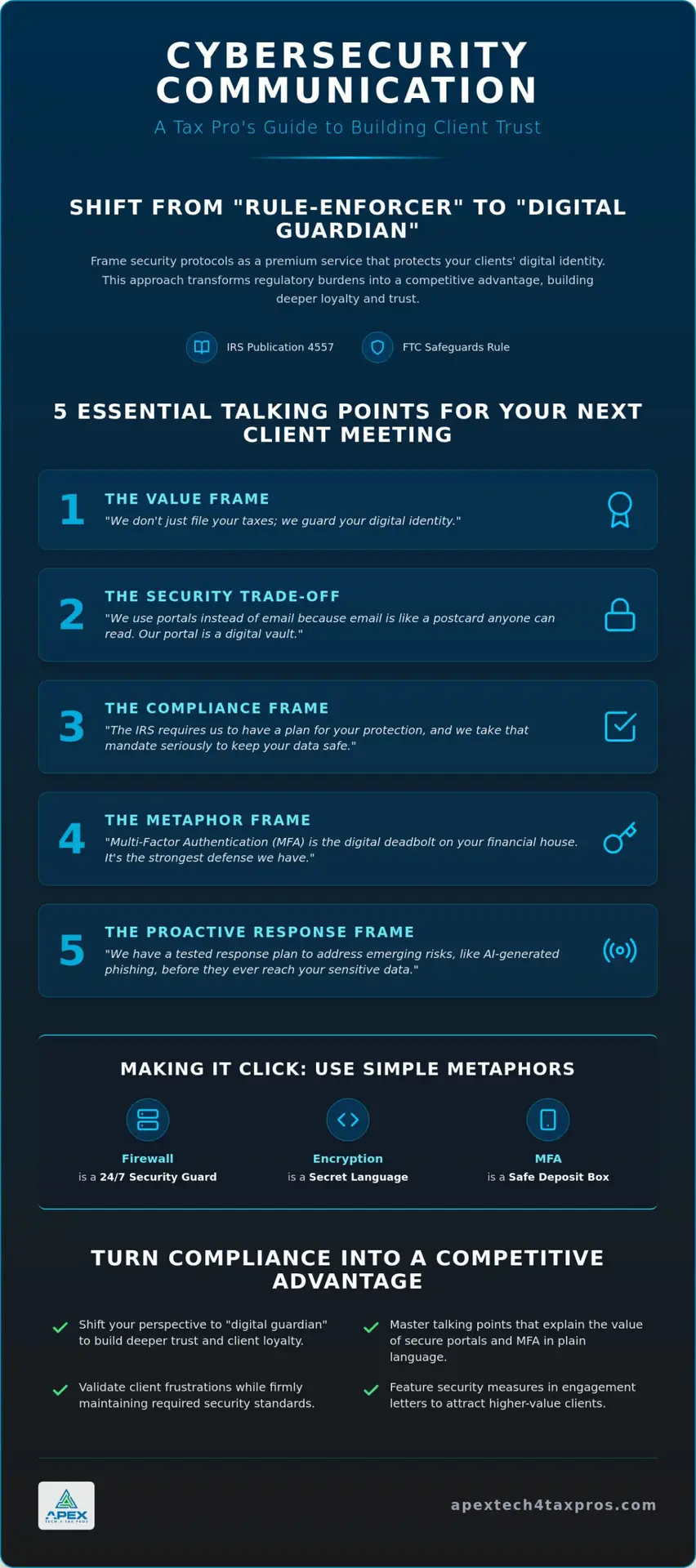
When you sit down with a client, the technical details often matter less than the emotional reassurance you provide. Using effective cybersecurity talking points for accounting clients allows you to explain complex systems in a way that feels like a service upgrade rather than a hurdle. In our 20 years of combined tax and IT experience, we’ve found that these five frames help lead the most productive conversations:
- The Value Frame: “We don’t just file your taxes; we guard your digital identity.” This shifts the focus from a simple transaction to a relationship of protection.
- The Security Trade-off: “We use portals instead of email because email is like a postcard anyone can read. Our portal is a digital vault.”
- The Compliance Frame: “The IRS requires us to have a plan for your protection, and we take that mandate seriously to keep your data safe.”
- The Metaphor Frame: “Multi-Factor Authentication (MFA) is the digital deadbolt on your financial house. It’s the strongest defense we have.”
- The Proactive Response Frame: “We have a tested response plan to address emerging risks, like AI-generated phishing, before they ever reach your sensitive data.”
Using Metaphors to Explain Technical Security
When selecting cybersecurity talking points for accounting clients, metaphors are your best friend. You might describe a firewall as a 24/7 security guard at the gate of your data center. Encryption is like writing their tax documents in a secret language that only our computers can translate. For clients who feel MFA takes too long, explain it as a safe deposit box that requires two different keys to open. This aligns with FTC cybersecurity guidance, which emphasizes that security is a combination of technical tools and disciplined human habits.
The ‘Identity Theft Prevention’ Script
Our firm treats your tax return as a shield against identity theft, ensuring no one can use your name to claim a fraudulent refund. We’ve invested in advanced cybersecurity training for our entire staff so every person who touches your file is a trained observer for digital threats. This vigilance is part of our commitment to keeping your financial life private and secure. If you’re looking to strengthen your team’s defense, consider how ongoing education can become a major selling point for your firm.
Handling Friction: When Clients Object to Security Measures
It’s inevitable that some clients will push back against new security protocols. They might forget their portal passwords or find multi-factor authentication (MFA) to be a time-consuming hurdle. When these moments happen, your cybersecurity talking points for accounting clients should lead with empathy. You can say, “I completely understand that these extra steps feel like a hassle during a busy day. However, we use these tools because your financial safety is our absolute priority.” Validating their frustration while standing firm on the necessity of the protocol reinforces your role as a professional protector. This is where tools like a Secure Virtual Desktop become invaluable, as they allow you to explain that sensitive data never actually leaves the firm’s digital vault.
The ‘Email is Easier’ Objection
The most common objection is the belief that email is simply easier. We often use the postcard metaphor to explain why this is a risk. An unencrypted email is like a postcard; anyone who handles it in transit can read the contents. For an accounting firm, the legal liability of a data interception is immense for both the client and the practitioner. By sticking to secure portals, you’re following the best practices found in AICPA cybersecurity resources, which protect everyone involved from the catastrophic fallout of identity theft.
Justifying the Cost of Compliance
When clients question fee increases, frame the conversation around the “utility” of professional security. Maintaining compliance with IRS Publication 4557 isn’t free. It requires specialized tools and regular IT Assessments to ensure no vulnerabilities exist in your network. Refining your cybersecurity talking points for accounting clients regarding fees helps them see the value in the protection you provide. You aren’t just charging for tax prep; you’re charging for the infrastructure that keeps their life’s work private.
A simple script might be: “To meet the latest IRS security standards and provide the highest level of identity protection, we’ve invested in enterprise-grade security systems. This ensures your data never stays on unencrypted devices, providing you with a level of safety that basic email simply cannot offer.” If you need help building the infrastructure to support these standards, you can book a WISP assessment with our Dallas-based team today.
How can I turn cybersecurity compliance into a competitive advantage for my firm?
Positioning your firm as a “Security First” practice is a powerful way to attract higher-value clients who prioritize privacy over the lowest price. When you use cybersecurity talking points for accounting clients that emphasize your role as a data custodian, you differentiate yourself from competitors who treat security as an afterthought. High-net-worth individuals and business owners are often looking for a firm that understands the high-stakes nature of identity protection. By making your security posture a visible part of your brand, you move from being a commodity service provider to a premium partner.
Your Written Information Security Plan shouldn’t just sit in a drawer for an IRS audit. We recommend highlighting your commitment to data safety in your welcome packets and on your “About Us” page. This includes your physical infrastructure, such as a Secure Office Network, which prevents “walk-in” data theft and local breaches. When clients see that our Dallas-based team has invested in enterprise-grade protection, it reinforces the trust they’ve placed in you. This level of transparency makes your firm the obvious choice for clients who value their financial anonymity.
To help you implement these standards effortlessly, we offer two primary subscription tiers designed for the tax industry. Our Seasonal subscription ($649.99) and our Yearly subscription ($1,099.99) both include a free customized WISP to ensure you meet IRS requirements without the DIY stress. While we handle the technical and compliance side at Apex Tech 4 Tax Pros, our sister company, APEX Tax Solutions, remains dedicated to the tax resolution side of the industry. This partnership allows us to bring over 20 years of combined experience to your firm. To secure your practice and gain a true competitive edge, you can book a WISP assessment or email us at info@at4tp.com today.
Securing Your Practice’s Future
Mastering cybersecurity talking points for accounting clients is about more than just checking a compliance box. It’s about evolving into the digital guardian your clients already expect you to be. By framing security measures as a value-added service and using relatable metaphors to explain complex IRS mandates, you remove the friction that often stalls professional relationships. You’ve worked hard to build your reputation; don’t let technical complexities or communication gaps undermine that legacy.
At Apex Tech 4 Tax Pros, we bring over 20 years of combined tax and IT experience to help you navigate this transition. We’re specialists in IRS Publication 4557 and FTC Safeguards Rule requirements, offering solutions specifically engineered for the accounting niche. Our mission is to provide you with a relief from the burden of regulatory documentation so you can focus on growth. Take the first step toward a more secure, trust-based practice today. You can Book a WISP Assessment with Apex Tech 4 Tax Pros or reach out to our Dallas-based team. We’re here to help you turn compliance into your firm’s greatest strength.
Frequently Asked Questions
How do I explain the FTC Safeguards Rule to my tax clients in simple terms?
You can explain the FTC Safeguards Rule as a federal law that requires financial institutions, including your tax firm, to maintain a strict digital shield over client data. Tell them it’s like a building code for information safety. It ensures that every professional they trust with their Social Security number has a documented plan and technical tools in place to prevent identity theft in an era of AI-driven fraud.
What should I say to a client who refuses to use my secure document portal?
When a client resists using a portal, validate their feeling that “email is easier” while explaining that unencrypted email is as public as a postcard. Tell them that for their protection, your firm’s policy prohibits receiving sensitive data through unsecured channels. It’s a non-negotiable standard that keeps their financial life out of the hands of hackers who actively scan emails for tax-related attachments.
Is it okay to charge a ‘security fee’ to cover the cost of IRS compliance?
Yes, it’s appropriate to adjust your fees to cover the specialized tools required by IRS Publication 4557. Frame this increase as an investment in their identity protection. Explain that it covers enterprise-grade encryption and the technical validation required to meet federal standards. Most clients understand that professional-grade security is a necessary part of modern tax preparation and are willing to pay for that peace of mind.
How can I prove to my clients that my accounting firm is actually secure?
The best way to prove your security is by sharing a summary of your Written Information Security Plan (WISP) and mentioning your adherence to IRS Publication 5708. Use your cybersecurity talking points for accounting clients to highlight that your firm undergoes regular risk assessments and staff training. Showing them that you have a proactive, documented process creates deeper trust than simply listing the software tools you use.
What is the best way to introduce Multi-Factor Authentication (MFA) to my older clients?
Introduce Multi-Factor Authentication (MFA) as a “digital deadbolt” that requires two keys to open their financial vault. Explain that the first key is their password and the second is a quick code sent to their phone to prove it’s really them. Most older clients appreciate the extra layer of safety once they understand it prevents unauthorized access even if a criminal steals their password. Offer to walk them through the login once to reduce any tech-related anxiety.