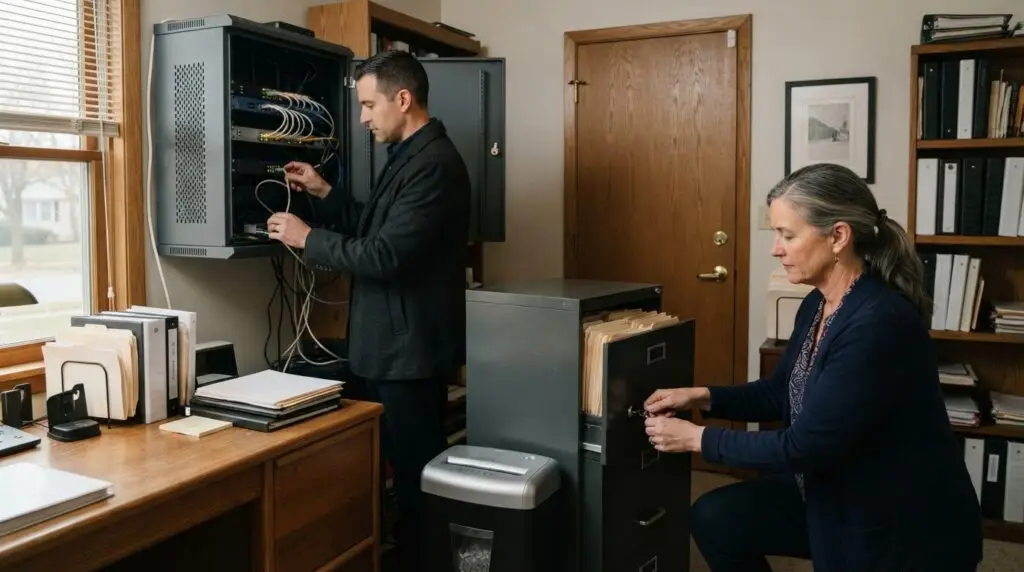
How to Write a WISP as a Sole Proprietor Tax Preparer
A sole proprietor tax preparer should adapt the IRS sample WISP to document how the practice protects taxpayer information. If you’re working out how…

A sole proprietor tax preparer should adapt the IRS sample WISP to document how the practice protects taxpayer information. If you’re working out how…

Annual security training is a sound yearly practice for tax firms, but the exact legal expectation depends on which rules apply. The mandatory…

A tax practice without a WISP faces federal compliance exposure, including possible FTC penalties when a violation continues. The Federal Trade…

A breach can announce itself through ordinary-looking system changes. Effective incident response for tax pros starts with recognizing warning signs,…

What if a written security plan looks complete on paper but doesn’t match how your tax office actually protects client data? That gap is at the heart…

What if your security policies look complete on paper but don’t reflect how your tax office actually handles information? A cybersecurity audit for…

What if the weak point in your tax office’s network isn’t the firewall, but a staff device or remote connection no one thought to review? Network…

What if one extra sign-in step could make a stolen password less useful? MFA for tax professionals adds an identity check to accounts such as…

Could your tax practice show who owns each security task and how the work is documented? The irs pub 4557 compliance checklist helps turn IRS…

WISP maintenance keeps your written security plan connected to the way your tax practice actually works. If your plan no longer reflects your…